Discover how multi-peptide formulations are investigated in modern laboratory research. This article explores peptide biology, molecular signaling, cellular communication, laboratory methodologies, and the scientific principles that make peptide blends an important area of preclinical investigation.
Why Are Multi-Peptide Formulations Receiving Greater Scientific Attention?
Peptide science has advanced considerably as researchers continue exploring increasingly complex biological signaling networks. While earlier investigations frequently focused on individual peptide molecules, modern laboratory research often examines carefully designed peptide combinations capable of interacting with multiple cellular pathways simultaneously. This broader scientific perspective reflects the growing understanding that biological systems rarely depend on a single signaling molecule to regulate cellular activity.
Multi-peptide formulations provide opportunities to investigate coordinated molecular responses involving cellular communication, protein regulation, extracellular matrix organization, and intracellular signaling. By studying several peptides together, researchers can observe biological interactions that may not be fully understood when individual peptides are evaluated in isolation.
These investigations continue to expand scientific knowledge of peptide biology while supporting research into molecular regulation, biochemical communication, and laboratory-based experimental methodologies. Current evidence remains focused on preclinical investigations designed to improve scientific understanding rather than establish therapeutic applications.
What Is a Multi-Peptide Research Formulation?
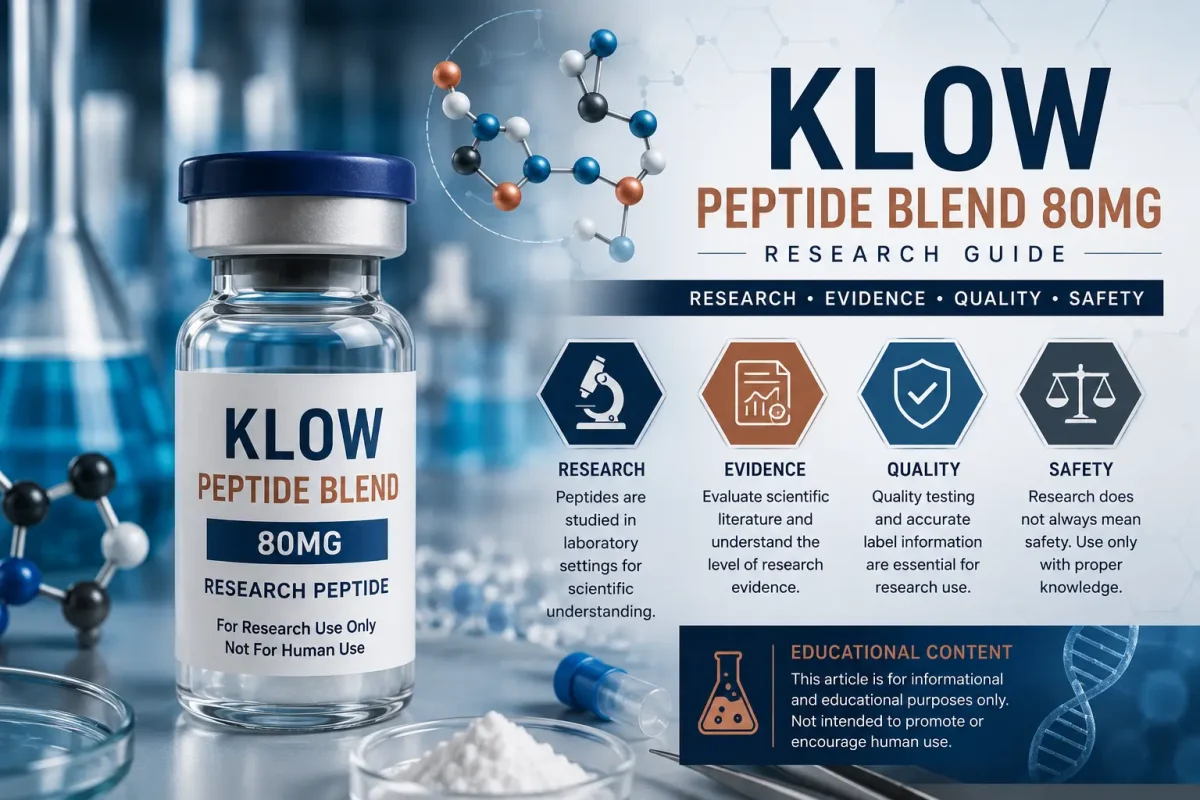
Glow Peptide Blend 50mg is a laboratory formulation that combines multiple research peptides into a single preparation for scientific investigation. Instead of concentrating on one biological messenger, peptide blends enable researchers to examine how several signaling molecules may influence interconnected cellular processes under standardized laboratory conditions.
Peptides are naturally occurring chains of amino acids that function as biological messengers throughout living systems. They participate in receptor activation, intracellular communication, enzyme regulation, and protein signaling, making them an important area of investigation within molecular biology and biomedical research. Because these signaling pathways operate as highly integrated networks, researchers increasingly investigate peptide combinations to gain a broader understanding of biological communication.
The formulation is supplied as a 50mg lyophilized powder, a presentation widely preferred for laboratory peptide research because it improves storage stability while supporting standardized handling procedures before experimental preparation.
Why Do Researchers Study Peptide Blends Instead of Single Peptides?
Most biological systems function through coordinated communication between numerous signaling molecules rather than isolated biochemical messengers. Studying peptide blends allows researchers to investigate broader molecular responses that more accurately reflect the complexity of biological regulation.
Experimental investigations involving peptide combinations often explore how multiple signaling pathways influence cellular communication, protein synthesis, structural organization, and biological adaptation simultaneously. This systems-based approach enables scientists to evaluate interactions that may not be apparent when individual peptides are studied separately.
By examining these coordinated molecular activities, peptide research continues to improve scientific understanding of biological regulation while supporting advances in laboratory methodology and molecular investigation.
How Do Peptides Influence Cellular Communication?
Cells continuously exchange biochemical information that regulates growth, metabolism, structural organization, and responses to changing environmental conditions. Peptides act as important signaling molecules by interacting with specific cellular receptors and initiating molecular pathways that coordinate numerous biological activities.
Researchers investigate peptide signaling to better understand how cells communicate through interconnected biochemical networks. Rather than functioning independently, signaling molecules cooperate with proteins, enzymes, transcription factors, and other regulatory systems that collectively influence cellular behavior.
Investigating peptide blends provides scientists with a broader perspective on molecular communication while expanding knowledge of coordinated cellular regulation and peptide biology.
How Are Multi-Peptide Formulations Investigated in Laboratory Research?
Modern laboratory research relies on carefully controlled experimental systems to investigate how peptide formulations interact with biological processes at the cellular and molecular levels. Rather than focusing on a single signaling pathway, researchers frequently evaluate multiple biological mechanisms simultaneously to better understand how peptide combinations influence complex cellular networks.
Experimental investigations typically begin with standardized sample preparation followed by biochemical analysis, cultured-cell studies, molecular biology techniques, and protein expression assays. These laboratory methods enable scientists to observe receptor interactions, intracellular signaling pathways, cellular communication, and protein regulation under reproducible research conditions.
Because peptide blends contain multiple biologically active components, researchers are able to evaluate coordinated molecular responses that may not be apparent when individual peptides are investigated independently. This broader scientific approach continues to expand knowledge of peptide biology while remaining entirely within the scope of preclinical laboratory research.
Which Scientific Disciplines Commonly Study Peptide Blends?
Peptide formulations are investigated across numerous scientific disciplines because peptide-mediated signaling influences many biological processes. Rather than being limited to a single research specialty, peptide blends support investigations involving molecular communication, cellular regulation, protein expression, extracellular matrix organization, and laboratory-based biological science.
The flexibility of multi-peptide formulations allows researchers to explore interconnected biological systems while improving scientific understanding of how signaling molecules contribute to normal cellular function. These investigations provide valuable information for biochemical research, molecular biology, regenerative science, and peptide-related laboratory studies.
| Scientific Field | Primary Research Focus |
|---|---|
| Cellular Biology | Investigation of cellular signaling and biological communication. |
| Peptide Science | Evaluation of peptide-mediated molecular interactions. |
| Molecular Biology | Analysis of intracellular signaling pathways and gene regulation. |
| Protein Expression | Studies involving protein synthesis and regulatory mechanisms. |
| Extracellular Matrix Research | Investigation of structural proteins and tissue organization. |
| Cell Culture Studies | Observation of peptide activity using controlled laboratory models. |
| Experimental Laboratory Research | Preclinical investigations involving multi-peptide formulations. |
Why Is Cellular Communication Central to Peptide Science?
Every biological system depends upon continuous communication between cells. Peptides serve as naturally occurring signaling molecules that transmit biochemical information through receptor-mediated pathways, allowing cells to coordinate growth, protein production, structural organization, metabolism, and responses to environmental changes. Understanding these communication networks remains one of the primary objectives of modern peptide research.
Researchers investigate peptide blends because multiple signaling molecules often influence complementary biological pathways simultaneously. Instead of observing one messenger molecule in isolation, scientists evaluate how coordinated peptide activity contributes to broader molecular responses across complex biological systems.
By examining these interconnected signaling mechanisms, laboratory investigations continue to improve scientific understanding of cellular communication, molecular regulation, protein interactions, and peptide-mediated biological processes.
What Physical Characteristics Define a Research Peptide Formulation?
Glow Peptide Blend 50mg is commonly supplied as a lyophilized laboratory powder, a presentation preferred throughout peptide research because it provides excellent storage stability and simplifies laboratory handling. Freeze-drying removes moisture while helping preserve the physical integrity of peptide materials during transportation and long-term storage.
The formulation typically appears as a fine white to off-white powder contained within a sealed laboratory vial. Before experimental use, laboratories commonly verify product labeling, inspect packaging integrity, document batch information, and confirm storage conditions to support traceability and standardized laboratory practices.
Research Specifications
| Formulation Type | Multi-Peptide Laboratory Blend |
| Strength | 50mg |
| Physical Form | Lyophilized Powder |
| Appearance | White to Off-White Powder |
| Packaging | Sterile Laboratory Vial |
| Storage Format | Freeze-Dried (Lyophilized) |
| Research Use | Laboratory Research Only |
How Should Multi-Peptide Formulations Be Handled in Research Laboratories?
Proper laboratory handling plays an essential role in maintaining the quality and consistency of peptide research materials throughout every stage of an experimental investigation. Before laboratory work begins, researchers generally establish standardized handling procedures that support reproducibility while minimizing unnecessary environmental exposure. Consistent workflows help ensure that samples remain properly documented from initial receipt through final analysis.
Upon receiving a laboratory formulation, research personnel commonly inspect packaging integrity, verify product identification, document batch information, and record storage conditions before introducing the material into laboratory inventory. These procedures improve traceability while helping researchers distinguish individual production batches during long-term scientific investigations.
Standardized sample preparation, organized documentation, and careful inventory management also contribute to more reliable laboratory workflows. Maintaining consistency throughout experimental procedures allows researchers to compare findings more effectively while reducing unnecessary variability between independent studies.
Which Storage Practices Help Preserve Peptide Stability?
Although lyophilization significantly improves the stability of peptide formulations by removing moisture, appropriate storage practices remain important throughout laboratory research. Peptide materials are generally protected from excessive humidity, prolonged light exposure, and unnecessary temperature fluctuations before experimental preparation. Maintaining suitable storage conditions helps preserve product integrity while supporting consistent laboratory handling.
Research laboratories typically retain Glow Peptide Blend 50mg within its original sealed laboratory vial until sample preparation is required. Keeping materials in their original packaging minimizes unnecessary environmental exposure while supporting organized inventory management and standardized laboratory procedures.
| Storage Factor | Recommended Laboratory Practice |
|---|---|
| Temperature | Store under controlled laboratory conditions. |
| Light Exposure | Protect from prolonged direct light whenever possible. |
| Moisture | Keep the container sealed and protected from humidity. |
| Original Packaging | Retain the product in its original laboratory vial until preparation. |
| Handling | Limit unnecessary environmental exposure during laboratory procedures. |
Why Are Packaging and Product Identification Essential for Laboratory Research?
Reliable scientific investigations depend on accurate product identification and organized documentation throughout the research process. Laboratory formulations are commonly supplied in sealed research vials that protect lyophilized materials during transportation, storage, and routine laboratory handling while supporting standardized inventory procedures.
Product labels typically include important information such as formulation name, strength, batch identification, and manufacturing details. Laboratories frequently record this information before experimental work begins, allowing researchers to maintain complete traceability throughout long-term research projects.
Accurate labeling, organized documentation, and structured inventory management reduce identification errors while supporting reproducible scientific investigations across multiple laboratory environments.
How Are Multi-Peptide Formulations Evaluated Before Experimental Studies?
Before laboratory investigations begin, peptide formulations are commonly evaluated using established analytical techniques designed to verify product identity and assess overall quality. These analytical procedures provide researchers with confidence that laboratory materials meet expected characteristics before incorporation into scientific studies.
Analytical characterization also supports consistency between manufacturing batches and improves reproducibility across independent laboratory investigations. Depending on laboratory protocols and available documentation, several complementary analytical techniques may be applied before experimental use.
| Analytical Method | Purpose |
|---|---|
| High-Performance Liquid Chromatography (HPLC) | Assessment of analytical purity. |
| Liquid Chromatography–Mass Spectrometry (LC-MS) | Verification of molecular identity. |
| Mass Spectrometry | Confirmation of molecular weight. |
| Chromatographic Analysis | Evaluation of sample composition. |
| Identity Verification | Confirmation of formulation authenticity. |
How Do Quality Assurance Practices Improve Scientific Reliability?
Quality assurance forms an essential component of modern laboratory research by helping maintain consistency throughout manufacturing, packaging, storage, and experimental handling. While quality control procedures may differ between manufacturers, laboratories generally rely on standardized documentation and analytical verification to support dependable scientific investigations.
Common quality assurance practices include batch traceability, analytical testing, packaging inspection, inventory documentation, product verification, and routine quality control procedures. Many research facilities also review Certificates of Analysis (CoA) before experimental work begins, allowing investigators to confirm batch-specific analytical information and manufacturing documentation.
By following structured quality assurance procedures, laboratories improve experimental reproducibility, strengthen scientific documentation, and increase confidence in research findings generated across multiple studies.
Frequently Asked Questions
What Is a Multi-Peptide Research Formulation?
A multi-peptide research formulation combines several carefully selected peptides into a single laboratory preparation for scientific investigation. Unlike single-peptide compounds that focus on one biological pathway, these formulations allow researchers to investigate how multiple signaling molecules interact across complex cellular systems. Their primary purpose is to support laboratory-based research involving peptide biology, molecular communication, and cellular signaling.
Why Are Peptide Blends Studied Instead of Individual Peptides?
Most biological systems rely on numerous signaling molecules working together rather than individual peptides acting independently. By studying peptide blends, researchers can evaluate coordinated molecular responses involving cellular communication, protein regulation, and intracellular signaling. This broader perspective helps scientists better understand complex biological networks under controlled laboratory conditions.
Why Are Research Peptides Commonly Lyophilized?
Lyophilization, or freeze-drying, removes moisture while helping preserve the structural integrity of peptide formulations during storage and transportation. This preparation method improves laboratory handling, supports long-term storage, and allows researchers to prepare samples according to standardized experimental protocols immediately before laboratory investigations begin.
Which Scientific Fields Commonly Investigate Peptide Blends?
Peptide blends are frequently investigated within peptide biology, molecular biology, cellular biology, protein expression research, regenerative science, extracellular matrix research, tissue engineering, and laboratory cell culture studies. These scientific disciplines examine how peptide-mediated signaling contributes to molecular communication and biological regulation.
How Are Peptide Research Materials Verified Before Experimental Use?
Before laboratory investigations begin, research materials are commonly evaluated using established analytical methods such as High-Performance Liquid Chromatography (HPLC), Liquid Chromatography–Mass Spectrometry (LC-MS), mass spectrometry, chromatography, and identity verification procedures. These analytical techniques help confirm product consistency and support reliable scientific investigations.