TB-500 10mg Research Peptide: Complete Educational Guide

TB-500 10mg Research Peptide: Complete Educational Guide

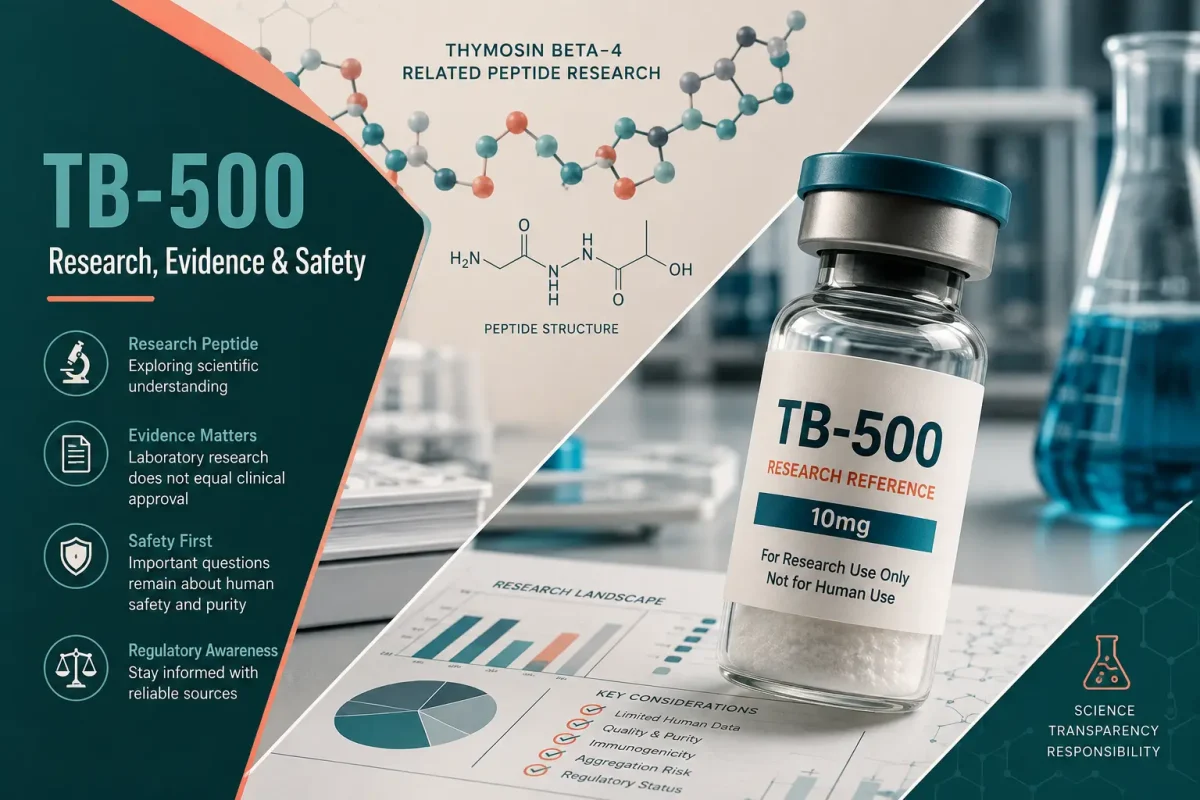
TB-500 10mg Research Peptide: An Educational Overview

A neutral introduction to TB-500, its research classification, terminology, and important considerations.

Compound
TB-500
Label
Research Peptide
Format
10mg Reference

TB-500 10mg Research Peptide is a term used in research and commercial contexts to describe a peptide associated with studies of thymosin beta-4-related biology. The subject has attracted scientific interest because thymosin beta-4 is involved in several biological processes studied in laboratory research.

What Is TB-500?

TB-500 is commonly described as a synthetic peptide related to thymosin beta-4. However, terminology surrounding these compounds can vary between research sources and commercial listings. Therefore, readers should distinguish between TB-500 as a research product and naturally occurring biological molecules.

Important research note

Research terminology does not establish that a peptide is approved for treating, preventing, or diagnosing a medical condition.

Why Is TB-500 Studied?

Researchers have investigated thymosin beta-4-related pathways in areas of cellular biology, tissue processes, and other laboratory settings. However, findings from experimental research should not automatically be interpreted as evidence of established benefits in humans.

Research Area

Peptide biology

Context

Laboratory research

Purpose

Educational reference

Priority

Evidence and safety

RESEARCH TERMINOLOGY

TB-500 and Thymosin Beta-4: What Is the Difference?

Understanding the terminology helps readers interpret peptide research more accurately.

TB-500 is commonly described in research and commercial sources as a thymosin beta-4-related peptide fragment. However, the names are not necessarily interchangeable. The U.S. Food and Drug Administration identifies TB-500 as thymosin beta-4 fragment (LKKTETQ), while also noting uncertainty around the characterization of TB-500-related substances. :contentReference[oaicite:0]{index=0}

Why Does Terminology Matter?

Scientific terminology can become confusing when commercial descriptions use similar names for different substances. Therefore, readers should check the exact chemical identity, formulation, and source information instead of assuming that every product labeled “thymosin beta-4” has identical characteristics.

Research distinction

A relationship between two peptide names does not automatically mean that they have identical composition, formulation, or research evidence.

What Does Current Evidence Show?

FDA's recent evaluation states that available information on TB-500-related substances is limited. The agency reported insufficient human exposure information and noted concerns involving peptide impurities, aggregation, and potential immunogenicity. It also found insufficient evidence to evaluate effectiveness for the wound-healing use that was reviewed. :contentReference[oaicite:1]{index=1}

TB-500

A research-related peptide term.

Thymosin Beta-4

A naturally occurring biological peptide studied in research.

Evidence

Human evidence for TB-500 remains limited.

Key Takeaway

Overall, readers should treat TB-500 terminology carefully. In addition, research findings involving thymosin beta-4 should not automatically be presented as proof that TB-500 produces the same effects in humans. For this reason, reliable scientific and regulatory sources are important when evaluating claims about research peptides.

RESEARCH & SAFETY

What Does Current Research Tell Us About TB-500?

Understanding the difference between laboratory research, human evidence, and regulatory information.

Research involving thymosin beta-4-related compounds has explored different biological processes. However, laboratory findings do not automatically establish safety or effectiveness in humans. Therefore, educational content should separate experimental observations from clinically established evidence.

Human Evidence Remains Limited

The U.S. Food and Drug Administration reports that it has not identified human exposure data for drug products containing thymosin beta-4 fragment, also known as TB-500. The agency also identifies potential concerns involving peptide aggregation, impurities, and immune-related reactions. :contentReference[oaicite:0]{index=0}

Evidence matters

A research peptide should not be presented as an established medical treatment simply because scientific studies have investigated related biological pathways.

Regulatory Information

FDA materials currently identify thymosin beta-4 fragment (LKKTETQ), also known as TB-500, among substances for which important safety information is lacking. In addition, FDA notes that inconsistent naming and characterization of TB-500-related substances can create uncertainty about the exact material being described. :contentReference[oaicite:1]{index=1}

Laboratory Research

Provides information about biological mechanisms.

Human Evidence

Current evidence for TB-500 remains limited.

Safety

Important uncertainties remain.

Why Product Quality Is Also Important

Peptides can present analytical and quality-control challenges. For example, FDA has highlighted concerns about impurities and aggregation for TB-500-related substances. As a result, the name printed on a research product does not by itself establish its identity, purity, or safety. :contentReference[oaicite:2]{index=2}

EDUCATIONAL TAKEAWAY

Research Is Not the Same as Medical Approval

Scientific investigation can help researchers understand a compound, but it does not automatically establish a product as safe, effective, or approved for human use.

Overall, TB-500 remains a subject of scientific and regulatory discussion rather than an established treatment. For this reason, readers should rely on current scientific literature and regulatory sources when evaluating claims about this research peptide.

FINAL RESEARCH SUMMARY

TB-500 10mg Research Peptide: Key Takeaways

A concise summary of terminology, evidence, research status, and safety considerations.

The term TB-500 10mg Research Peptide generally refers to a research product associated with thymosin beta-4 fragment terminology. However, current regulatory information shows that important questions remain regarding its characterization, safety, and human exposure. :contentReference[oaicite:0]{index=0}

What Are the Main Points?

01

Research Context

TB-500 is discussed in scientific and regulatory research contexts.

02

Evidence

Human safety information remains limited according to current FDA material.

03

Characterization

Similar names may describe different forms or substances.

Why Caution Is Important

FDA has identified potential concerns involving immunogenicity, peptide aggregation, and peptide-related impurities for compounded products containing thymosin beta-4 fragment, also known as TB-500. In addition, FDA reports that it has not identified human exposure data for drug products containing this substance. :contentReference[oaicite:1]{index=1}

Therefore, readers should not interpret laboratory research or commercial descriptions as proof of established medical benefits. Likewise, the presence of a peptide name on a product label does not independently establish its identity, purity, quality, or safety.

IMPORTANT REMINDER

Research Information Is Not Medical Advice

This article is intended for educational purposes. It does not establish TB-500 as a treatment or recommend human use.

Final Summary

Overall, TB-500 remains an area of scientific and regulatory interest. Current FDA documents emphasize limited human safety information and concerns about characterization and peptide-related quality issues. :contentReference[oaicite:2]{index=2}

For this reason, readers should evaluate claims carefully and use current scientific literature and regulatory information when researching TB-500. Finally, anyone considering a substance for personal health should discuss the matter with a qualified healthcare professional.

EDUCATIONAL TAKEAWAY

Check Evidence Before Accepting Health Claims

Reliable scientific and regulatory sources provide a stronger basis for understanding research peptides than promotional descriptions.

Leave a Reply

Your email address will not be published. Required fields are marked *

error: Content is protected !!