1P-LSD, also known as 1-propionyl-d-lysergic acid diethylamide, is a lysergamide derivative that has attracted scientific interest because of its structural relationship with LSD. Researchers have investigated its chemical identity, analytical characteristics and pharmacological properties through published laboratory and preclinical studies.
One important publication is the research paper titled Return of the Lysergamides, Part I: Analytical and Behavioural Characterization of 1-Propionyl-d-Lysergic Acid Diethylamide (1P-LSD). Published online in 2015 and included in a 2016 journal issue, this study established an important scientific reference for understanding the compound.
This article examines the research background, molecular characteristics, analytical techniques, published behavioral findings, human research and forensic relevance of 1P-LSD. Furthermore, it explains the limitations of the available evidence and why careful scientific interpretation remains important.
What Is 1P-LSD? Chemical Background and Molecular Characteristics
1P-LSD belongs to the broader family of lysergamides, a group of compounds based on the lysergic acid molecular framework. These compounds have been studied in medicinal chemistry, analytical science and pharmacology because relatively small structural differences can influence their chemical and biological properties.
In scientific literature, 1P-LSD is generally discussed in relation to LSD and other structurally related derivatives. Its identification became an important subject for forensic researchers because reliable reference information was initially limited.
Understanding the Lysergamide Chemical Family
Lysergamides share a common structural framework derived from lysergic acid. However, individual members of this family can differ in the substituents attached to particular positions of their molecular structures.
These variations are important in analytical chemistry. Although two compounds may have closely related molecular frameworks, their analytical signatures and molecular interactions are not necessarily identical.
Consequently, researchers need appropriate chemical characterization rather than relying on a compound's name, appearance or assumed relationship with another substance.
Chemical Structure of 1P-LSD
The name 1-propionyl-d-lysergic acid diethylamide describes a lysergamide structure containing a propionyl-related modification at the nitrogen position of the indole ring system.
This structural feature distinguishes 1P-LSD from LSD. Researchers therefore examine molecular and spectroscopic evidence to establish the identity of a sample and distinguish it from related compounds.
1P-LSD and LSD: Why Structural Differences Matter
LSD and 1P-LSD share a closely related lysergamide framework. Nevertheless, the structural modification in 1P-LSD means that the compounds should not be treated as chemically identical.
Analytical techniques can reveal differences in molecular mass, chromatographic behavior and spectroscopic characteristics. These observations help researchers evaluate chemical identity and understand the relationship between related lysergamides.
The Original Scientific Study: Return of the Lysergamides, Part I
The original research paper by Brandt and colleagues is a central publication in the scientific literature on 1P-LSD. It was first published online on 12 October 2015 and later appeared in the September 2016 issue of Drug Testing and Analysis.
The study addressed two connected research questions. First, the researchers investigated how 1P-LSD could be chemically characterized and distinguished from LSD. Second, they examined selected behavioral responses in mice to investigate its relationship with serotonergic pharmacology.
Background and Research Objectives
At the time of publication, detailed analytical and pharmacological information about 1P-LSD was limited. This created challenges for laboratories that might encounter unfamiliar lysergamide derivatives during forensic or toxicological investigations.
Therefore, the researchers aimed to establish a scientific characterization of the compound using complementary analytical methods. They also investigated whether its behavioral findings were consistent with activity involving the serotonin 5-HT2A receptor.
Research Methodology
The paper combined chemical characterization with preclinical behavioral research. Its analytical component included chromatographic separation, mass spectrometry and spectroscopic examination.
In addition, the researchers used a mouse behavioral model to investigate the head-twitch response. A selective 5-HT2A receptor antagonist was included in the research design to examine the receptor involvement associated with the observed response.
Major Findings from the Publication
The analytical results provided evidence supporting the chemical characterization of 1P-LSD and demonstrated that several analytical techniques could contribute complementary information.
The behavioral component reported a response in mice that was consistent with serotonergic 5-HT2A receptor involvement. However, the authors also emphasized that the extent to which these findings could be translated into comparable human effects required further investigation.
This distinction is important because preclinical behavioral findings do not establish human clinical outcomes. Instead, they provide one part of a wider scientific evidence base.
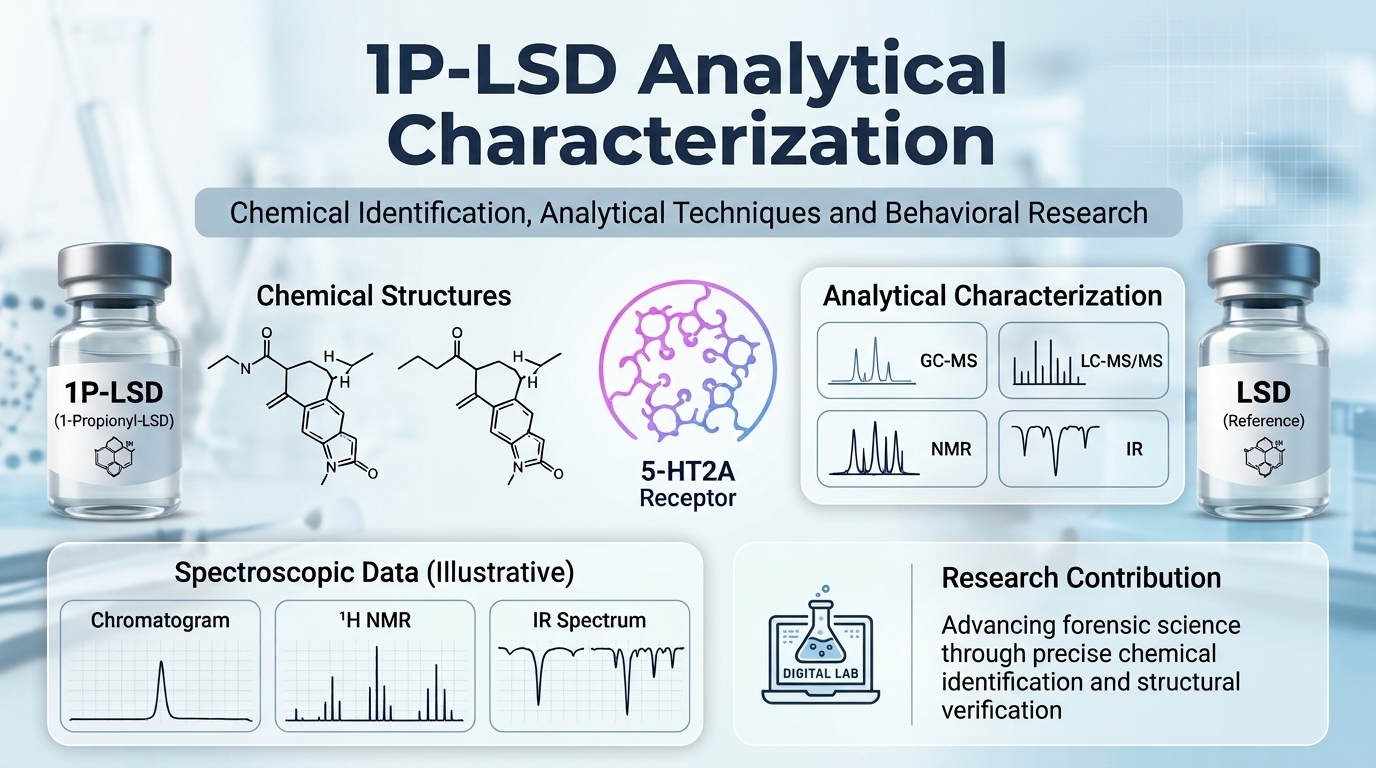
Analytical Techniques Used in 1P-LSD Identification
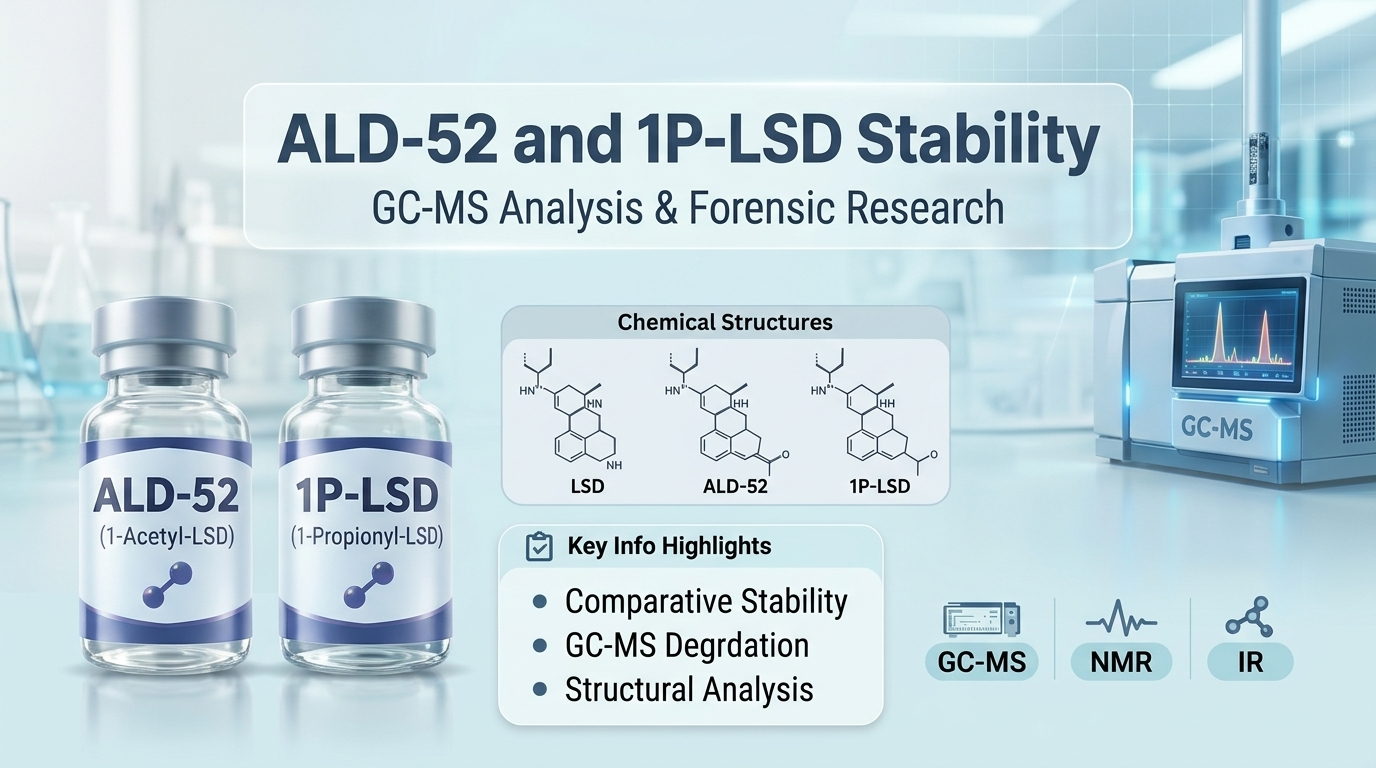
Analytical characterization is central to the original 1P-LSD publication. Researchers used multiple techniques because each method provides different information about a chemical sample.
For example, chromatography helps separate components, while mass spectrometry provides information about molecular ions and fragmentation. Meanwhile, spectroscopy contributes evidence about molecular structure and chemical environments.
Gas Chromatography–Mass Spectrometry (GC-MS)
Gas chromatography–mass spectrometry combines two analytical technologies. Gas chromatography separates compounds according to their behavior within a chromatographic system, while mass spectrometry provides information about the ions produced during analysis.
In forensic chemistry, GC-MS is widely recognized as an important analytical platform. Researchers can compare chromatographic observations and mass spectral information with suitable reference data to support chemical identification.
However, a mass spectrum should not be interpreted in isolation. Related compounds may share certain analytical features, so additional evidence can be necessary to support a reliable conclusion.
Liquid Chromatography and Mass Spectrometry
Liquid chromatography separates sample components in a liquid mobile phase. When combined with mass spectrometry, it provides information that can support the investigation of compounds that require liquid-phase separation.
The original 1P-LSD research included high-resolution liquid chromatography and mass spectrometric analysis. This provided an additional analytical perspective alongside the other methods used in the study.
Tandem Mass Spectrometry (MS/MS)
Tandem mass spectrometry involves the examination of selected ions and their resulting product ions. It can provide additional structural information by revealing how molecular ions behave during fragmentation.
Researchers use this information to strengthen analytical interpretation. Nevertheless, fragmentation observations should be considered alongside other evidence rather than treated as independent proof of every structural feature.
Nuclear Magnetic Resonance Spectroscopy (NMR)
Nuclear magnetic resonance spectroscopy is an important technique for investigating molecular structure. It provides information about the chemical environments of certain atomic nuclei within a molecule.
The original publication included one-dimensional and two-dimensional NMR analysis. These techniques helped the researchers examine structural features and support the proposed molecular characterization.
Infrared Spectroscopy (IR)
Infrared spectroscopy investigates how molecular bonds interact with infrared radiation. The resulting spectrum contains information associated with different molecular vibrations and functional groups.
In analytical research, IR can complement mass spectrometry and NMR. However, its results are most useful when interpreted as part of a broader analytical assessment.
| Analytical Method | Scientific Purpose | Research Contribution |
|---|---|---|
| GC-MS | Chromatographic separation and mass analysis | Supports chemical characterization. |
| LC-MS | Liquid-phase separation and mass analysis | Provides complementary analytical evidence. |
| MS/MS | Examination of product-ion information | Contributes to structural interpretation. |
| NMR | Investigation of molecular environments | Supports molecular structure assessment. |
| IR | Examination of molecular vibrations | Provides additional spectroscopic evidence. |
Understanding the Analytical Results and Chemical Identification
The original study demonstrated why analytical evidence from different instruments can be valuable when characterizing structurally related compounds.
Rather than relying on a single observation, researchers considered chromatographic, mass spectrometric and spectroscopic findings together. This approach helps reduce uncertainty when interpreting samples that may contain closely related chemical substances.
Molecular Identity and Mass Spectral Evidence
Mass spectrometry can provide information about molecular ions and product-ion patterns. These observations can help researchers assess whether a sample is consistent with a proposed chemical identity.
However, similar compounds may produce overlapping analytical features. Therefore, the interpretation of mass spectral information should consider the complete analytical context and supporting evidence.
Why Chromatographic Separation Matters
Chromatographic separation is useful because a sample may contain more than one detectable component. Separating those components can help researchers distinguish the analytical signals associated with different substances.
Furthermore, chromatographic results can be compared with appropriate reference information. Nevertheless, retention behavior alone is not sufficient to establish every aspect of a compound's identity.
Combining Multiple Analytical Techniques
Each analytical method has strengths and limitations. For this reason, combining suitable techniques can provide a more complete understanding than relying on one instrument alone.
In the original study, mass spectrometry and chromatography were complemented by NMR and infrared spectroscopy. This combination supported a broader characterization of 1P-LSD and its relationship with LSD.
Behavioral Research and the 5-HT2A Receptor
Alongside its analytical component, the original publication investigated a behavioral response associated with serotonergic pharmacology. This part of the research focused on the 5-HT2A receptor and a preclinical model known as the head-twitch response.
Understanding the 5-HT2A Receptor
The 5-HT2A receptor is one of the receptors that respond to serotonin, a neurotransmitter involved in several physiological and neurological processes.
It has attracted attention in psychedelic research because several serotonergic psychedelic compounds interact with this receptor. However, receptor activity is complex and cannot be fully described through a single behavioral observation.
What Is the Head-Twitch Response?
The head-twitch response, commonly abbreviated as HTR, is a rapid head movement observed in certain rodent behavioral studies. Researchers have used it as a preclinical model when investigating compounds associated with serotonergic psychedelic activity.
Although the model can provide useful pharmacological information, it is not a direct measurement of human subjective experience. Consequently, findings from animal studies must be interpreted within their specific experimental context.
Findings from the Original 1P-LSD Study
The original publication reported that 1P-LSD produced a dose-dependent increase in the head-twitch response in mice. The researchers also reported that pretreatment with a selective 5-HT2A receptor antagonist abolished the measured response.
These observations supported the involvement of 5-HT2A receptor signalling in the behavioral response examined by the study.
Nevertheless, the findings do not establish that the same response or pharmacological profile occurs in humans. The authors specifically identified the need for further investigation into possible human effects.
What Does Human Research Say About 1P-LSD?
Human research provides a different type of evidence from analytical laboratory studies and animal experiments. It can help researchers investigate pharmacokinetic observations and selected subjective measures under controlled research conditions.
A relevant publication appeared in 2020 under the title Pharmacokinetics and Subjective Effects of 1P-LSD in Humans after Oral and Intravenous Administration.
The 2020 Human Pharmacokinetic Study
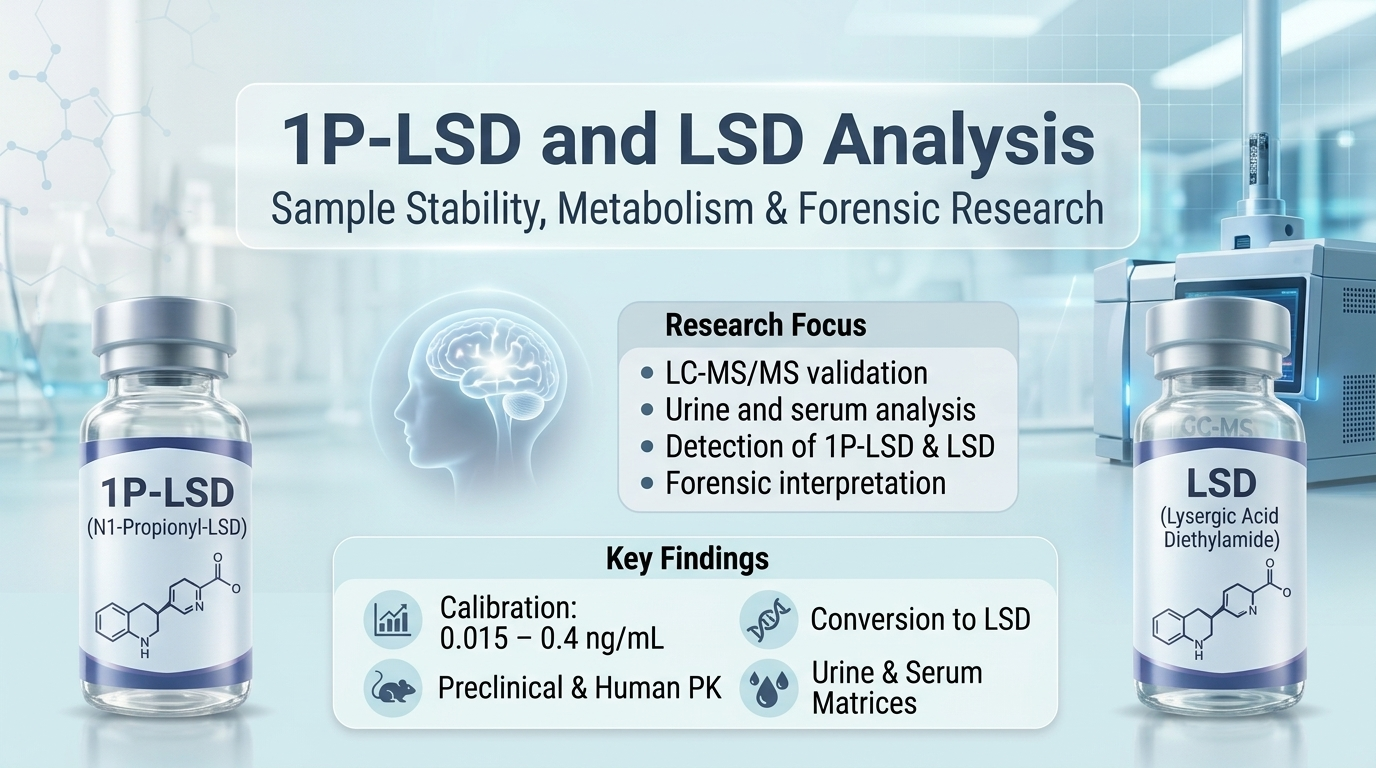
This publication examined 1P-LSD-related findings in two human volunteers. The researchers evaluated serum and urine samples using a validated liquid chromatography–tandem mass spectrometry method.
The study is relevant because it added human analytical observations to a literature that had previously relied heavily on chemical characterization and preclinical findings.
What the Researchers Reported
The publication reported that LSD was detected in the analyzed serum and urine samples following the study conditions. The authors discussed these observations in relation to the hypothesis that 1P-LSD may undergo conversion into LSD.
These findings are scientifically relevant, but they should not be interpreted as definitive evidence about every metabolic process or every possible individual response.
Why the Study's Sample Size Matters
The human study involved only two volunteers. Although it provides useful preliminary evidence, such a small sample cannot establish broad population-level conclusions.
Moreover, a limited study cannot independently determine long-term safety, clinical effectiveness or the full range of individual differences. Further research would be needed to address those questions.
Related Lysergamide Research and Scientific Comparisons
The original 1P-LSD publication forms part of a wider body of research known as the Return of the Lysergamides series. These publications examine different members of the lysergamide family using analytical and, in selected studies, behavioral methods.
Although the compounds investigated are not identical, the papers provide useful context for understanding how analytical chemistry is applied to structurally related substances.
Part II: AL-LAD and LSZ
The second publication examined AL-LAD and LSZ. It reported analytical characterization using techniques including mass spectrometry, chromatography, infrared spectroscopy and NMR.
The paper also included preclinical behavioral findings. Its relevance to 1P-LSD research lies in its demonstration of how multiple analytical approaches can be used to investigate related lysergamides.
Part III: ETH-LAD and 1P-ETH-LAD
The third publication focused on ETH-LAD and 1P-ETH-LAD. It expanded the analytical literature by examining additional lysergamide derivatives using complementary chemical characterization methods.
It is particularly relevant to forensic and toxicological research because the authors discussed the importance of analytical information for compounds that may be encountered in clinical or forensic settings.
Further Research in the Lysergamide Series
Additional publications in the broader series investigated other lysergamides, including compounds such as 1B-LSD and 1CP-LSD.
These papers should be treated as related research rather than direct evidence about 1P-LSD. Their value is mainly in demonstrating the broader analytical challenges associated with structurally related compounds.
| Research Publication | Main Subject | Relevance to 1P-LSD Research |
|---|---|---|
| Part I | 1P-LSD | Original analytical and behavioral characterization. |
| Part II | AL-LAD and LSZ | Related analytical and preclinical research. |
| Part III | ETH-LAD and 1P-ETH-LAD | Expanded analytical characterization. |
| Parts IV–VI | Other lysergamide derivatives | Broader context for analytical research. |
Forensic and Toxicological Importance of 1P-LSD Identification
Accurate chemical identification is important in forensic science and toxicology. Laboratories may encounter unfamiliar substances or compounds that share structural features with better-known chemicals.
In these situations, reliable analytical evidence helps distinguish a confirmed identification from an assumption based on appearance, labeling or an incomplete test result.
Why Accurate Chemical Identification Matters
Forensic investigations often require a clear understanding of the chemical identity of an examined sample. This is particularly important when structurally related substances may produce overlapping analytical observations.
Therefore, suitable reference information and complementary analytical methods can help improve the reliability of laboratory conclusions.
Analytical Evidence in Forensic Investigations
Chromatography, mass spectrometry and spectroscopy each contribute different types of information. When appropriately validated and interpreted, these methods can support a more complete assessment of chemical identity.
Furthermore, transparent reporting allows other researchers and laboratories to understand how a conclusion was reached. This is essential for scientific reproducibility and forensic confidence.
Distinguishing Identification from Assumption
A label or visual appearance cannot independently confirm the identity of a chemical sample. Similarly, one analytical result may not answer every question about its composition.
For this reason, reliable forensic conclusions should be based on appropriate methods, documented evidence and a clear explanation of analytical limitations.
Limitations and Unanswered Questions in 1P-LSD Research
Although published studies have contributed important information about 1P-LSD, several limitations remain. The available evidence includes analytical characterization, preclinical behavioral research and a very small human pharmacokinetic investigation.
These different research types answer different questions. Therefore, their findings should not be combined into a broader conclusion that the individual studies were not designed to establish.
Limitations of Preclinical Research
Animal behavioral models can provide useful information about selected pharmacological responses. However, they cannot reproduce the full complexity of human experiences or establish human clinical outcomes.
Limitations of Human Evidence
The 2020 human publication involved only two volunteers. Consequently, it provides limited preliminary information rather than a comprehensive understanding of human pharmacokinetics or individual variability.
Analytical and Methodological Limitations
Every analytical method has limitations. Chromatographic separation, mass spectrometry and spectroscopy provide complementary evidence, but their interpretation depends on the quality of the method and the context of the sample.
Furthermore, conclusions should be based on validated evidence rather than assuming that one analytical technique can establish every chemical property.
Need for Further Scientific Investigation
Additional research may help clarify outstanding questions concerning the compound's analytical characteristics, metabolism and pharmacological profile. Independent replication and transparent reporting are also important for strengthening the scientific evidence base.
Frequently Asked Questions About 1P-LSD Research
What is 1P-LSD in scientific research?
1P-LSD is a lysergamide derivative investigated in analytical chemistry and pharmacological research. Published studies have examined its chemical identity, relationship with LSD and selected preclinical and human research findings.
What was the objective of the original 1P-LSD study?
The original study aimed to characterize 1P-LSD using analytical and spectroscopic techniques. It also investigated a selected behavioral response in mice associated with 5-HT2A receptor activity.
Which analytical methods were used in the original research?
The publication reported chromatographic and mass spectrometric methods alongside infrared and nuclear magnetic resonance spectroscopy. These techniques provided complementary information for chemical characterization.
Why is GC-MS relevant to 1P-LSD research?
GC-MS combines chromatographic separation with mass spectrometric analysis. It can contribute useful chemical identification evidence when interpreted with suitable reference information and other analytical findings.
Why did researchers use NMR spectroscopy?
NMR provides information about molecular chemical environments and helps researchers assess structural characteristics. In the original publication, it complemented the other analytical techniques.
What is the 5-HT2A receptor's role in the original study?
The researchers investigated whether the observed mouse behavioral response involved 5-HT2A receptor signalling. Their findings supported the involvement of this receptor in the measured response.
What is the head-twitch response?
The head-twitch response is a rodent behavioral model used in selected serotonergic pharmacology studies. It provides preclinical information but is not a direct measurement of human subjective effects.
Has 1P-LSD been investigated in human research?
Yes. A 2020 publication reported human pharmacokinetic observations involving two volunteers. Because the sample was very small, its findings should be treated as preliminary.
What is the difference between analytical characterization and pharmacological research?
Analytical characterization investigates chemical identity and structural properties. Pharmacological research examines biological interactions and responses. These areas complement one another but answer different scientific questions.
Why are related lysergamide studies important?
Related publications provide wider scientific context about the analytical challenges associated with structurally similar compounds. However, findings from another lysergamide should not automatically be applied to 1P-LSD.