
$129.99
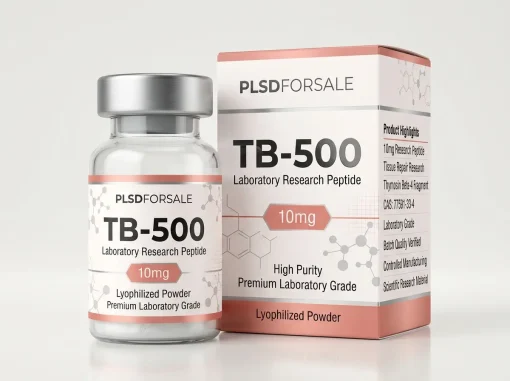
TB-500 10mg is a laboratory-grade lyophilized research peptide developed for tissue repair and scientific research. Each vial contains 10mg of Thymosin Beta-4 Fragment, manufactured to support standardized laboratory investigations. The source product reports 97.712% purity (CoA Reported), lists CAS No. 77591-33-4, and recommends bacteriostatic water for reconstitution while providing storage guidance for laboratory handling.
Researchers use TB-500 10mg to support tissue repair, connective tissue, and cellular research in qualified laboratory environments. The lyophilized powder formulation helps laboratories prepare standardized samples while maintaining consistent experimental procedures. Each vial contains 10mg of research peptide manufactured under controlled production standards to support reliable analytical workflows.
The source product identifies TB-500 as a Thymosin Beta-4 Fragment research peptide, classifies it under Tissue Repair Research, reports 97.712% purity (CoA Reported), and lists CAS Number 77591-33-4. It also recommends bacteriostatic water for reconstitution and provides storage guidance for laboratory use.
Researchers choose TB-500 because it provides:
These features help laboratories maintain consistent sample preparation and reproducible research workflows.
Researchers investigate TB-500 in laboratory models involving muscle repair, connective tissue, angiogenesis, inflammatory signaling, and cell migration. According to the source product, investigations also examine tendon and ligament models, chronic injury models, and complementary tissue repair mechanisms. These studies remain limited to controlled laboratory research and do not establish therapeutic applications.
The source product recommends storing the lyophilized powder at −20°C while protecting it from light and moisture. After reconstitution with bacteriostatic water, laboratories should store the solution at 2–8°C and use it within the recommended timeframe.
| Specification | Details |
|---|---|
| Product Name | TB-500 10mg |
| Strength | 10mg |
| CAS Number | 77591-33-4 |
| Category | Tissue Repair Research |
| Form | Lyophilized Powder |
| Vial Size | 10ml Laboratory Vial |
| Quantity | 1 Vial |
| Purity | 97.712% (CoA Reported) |
| Research Grade | Laboratory Grade |
| Research Classification | Thymosin Beta-4 Fragment |
| Intended Use | Laboratory, Scientific & Analytical Research |
| Storage (Lyophilized) | Store at −20°C. Protect from light and moisture. |
| Storage (Reconstituted) | Store at 2–8°C. Use within 8–12 weeks. |
| Recommended Reconstitution | Bacteriostatic Water |
Researchers use TB-500 10mg as a laboratory-grade research peptide for tissue repair and scientific research.
The product page identifies TB-500 as a Thymosin Beta-4 Fragment research peptide.
The product page reports 97.712% purity (CoA Reported).
TB-500 10mg comes as a lyophilized powder in a laboratory vial.
Store the unopened vial at −20°C while protecting it from light and moisture.
Store the reconstituted solution at 2–8°C and use it within 8–12 weeks.
Researchers should reconstitute TB-500 10mg with Bacteriostatic Water.
The product page describes TB-500 as a research peptide studied in laboratory models involving muscle repair, connective tissue, angiogenesis, inflammatory signaling, cell migration, tendon, and ligament research.
Qualified laboratories, universities, research organizations, and scientific institutions conducting laboratory investigations.
No. Researchers should use TB-500 10mg only for laboratory, scientific, and analytical research. Do not use it for human consumption.
Reviews
There are no reviews yet.