
$65.00
Researchers use IGF-1 LR3 as a laboratory-grade peptide in controlled scientific investigations. Research institutions and analytical laboratories utilize standardized peptide materials to support experimental consistency across molecular and biochemical studies.
The lyophilized presentation provides a practical format for transportation, storage, and laboratory preparation while helping maintain material integrity before experimental use. Standardized peptide formulations also assist researchers in establishing consistent protocols throughout analytical investigations.
Modern laboratory research frequently depends on standardized peptide materials that provide reliable handling characteristics and consistent documentation throughout scientific investigations. IGF-1 LR3 has become a recognized research compound for laboratories conducting experimental work involving peptide interactions and molecular signaling mechanisms.
Controlled laboratory environments require research materials that support repeatable procedures and structured analytical workflows. By utilizing standardized peptide formulations, research teams can maintain consistency across multiple experimental projects while following established laboratory practices.
Furthermore, the compact vial format allows laboratories to organize storage efficiently and prepare materials according to individual research protocols. Combined with the stability offered by lyophilized formulations, these characteristics make peptide materials practical for long-term laboratory use.
Research teams continue to evaluate IGF-1 LR3 in controlled laboratory investigations focused on receptor interactions, peptide characteristics, and molecular signaling mechanisms. Researchers continue to explore its properties through controlled laboratory studies focused on cellular communication and experimental peptide research.
Scientific investigations involving peptide compounds frequently emphasize standardized methodology, accurate documentation, and reproducible experimental conditions. As research programs continue to expand, laboratories often incorporate well-characterized peptide materials into analytical workflows that require dependable preparation and consistent handling practices.
Rather than serving as a finished application, IGF-1 LR3 functions as a research material intended for qualified laboratory professionals performing controlled scientific investigations. Its standardized formulation supports analytical environments where traceability and experimental consistency remain priorities.
| Specification | Details |
|---|---|
| Compound | IGF-1 LR3 |
| Strength | 1mg per Vial |
| Physical Form | Lyophilized Powder |
| Container Size | 3ml Vial |
| Packaging | Sealed Laboratory Vial |
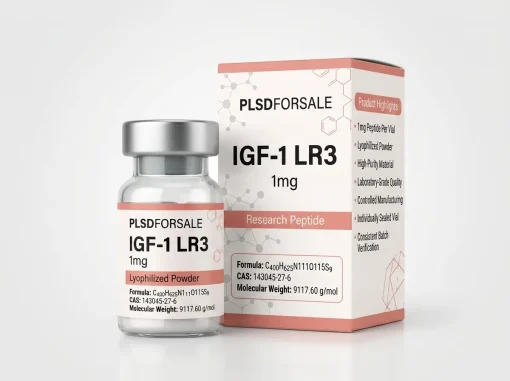
| Molecular Formula | C400H625N111O115S9 |
| Molecular Weight | 9117.60 g/mol |
| CAS Number | 143045-27-6 |
| Storage State | Not Reconstituted |
| Research Classification | Research Grade Material |
Researchers often select lyophilized research materials because this format supports convenient storage, transportation, and laboratory preparation while helping preserve material quality before experimental use.
Researchers investigate IGF-1 LR3 in controlled laboratory studies involving peptide characteristics, molecular signaling pathways, receptor interactions, and experimental cellular research. All investigations should follow established scientific protocols.
Qualified laboratory professionals, scientific researchers, universities, and research institutions should handle this material in accordance with appropriate laboratory procedures and safety guidelines.
Researchers should store unopened its vials in a cool, dry environment away from direct sunlight, moisture, and excessive heat. Furthermore, laboratories should keep the container tightly sealed until the material is prepared according to established research protocols.
No. Researchers supply IGF-1 LR3 exclusively for laboratory, scientific, and analytical investigations. Qualified laboratory professionals should use this material only in controlled research environments. It is not intended for human consumption, veterinary use, therapeutic applications, dietary purposes, cosmetic use, or household use.
Laboratories often choose lyophilized research materials because the freeze-drying process helps maintain product stability during storage and transportation. In addition, the lyophilized format provides researchers with a practical and standardized material for laboratory preparation before scientific investigations.
Yes. Qualified researchers and laboratory professionals should handle it by using appropriate laboratory safety procedures and established experimental protocols to support accurate and reproducible research activities.
Reviews
There are no reviews yet.